
Casual and High-End Are Pricing Categories,
Not Design Briefs
Category
Articles
Time to read
5 MINS
Written by
Social F+B Consulting
Designing Beyond
"Casual" and "High-End"
“Casual” and “High-End” are still two of the most frequently used words in an F&B brief. They help define pricing, staffing and competitive positioning.
What they do not tell a designer is how the restaurant should feel.
We spoke with our MENA Design Director, Karma Zahran, about two recently shortlisted projects at the Commercial Interior Design MENA Awards 2026, recognised at opposite ends of the hospitality spectrum: Tokyo Social in the Best Casual F&B Interior Design Concept category, and Maison Lyla for Best High-End F&B Interior Design Concept.
The two projects raise a broader question: how useful are labels such as ‘casual’ and ‘high-end’ when it comes to making design decisions?
In MENA, where expectations around hospitality run deep, a casual restaurant can still be an important social occasion. Guests may come for accessible food and relaxed service, but they still expect atmosphere, comfort and a setting worth gathering in. Equally, some of the strongest high-end restaurants today feel warm, easy and almost informal.
“The labels are useful for describing positioning, pricing and service expectations, but they only tell us part of the story,” says Karma. “I find it more useful to ask what experience the concept promises and whether every part of the venue delivers it.”
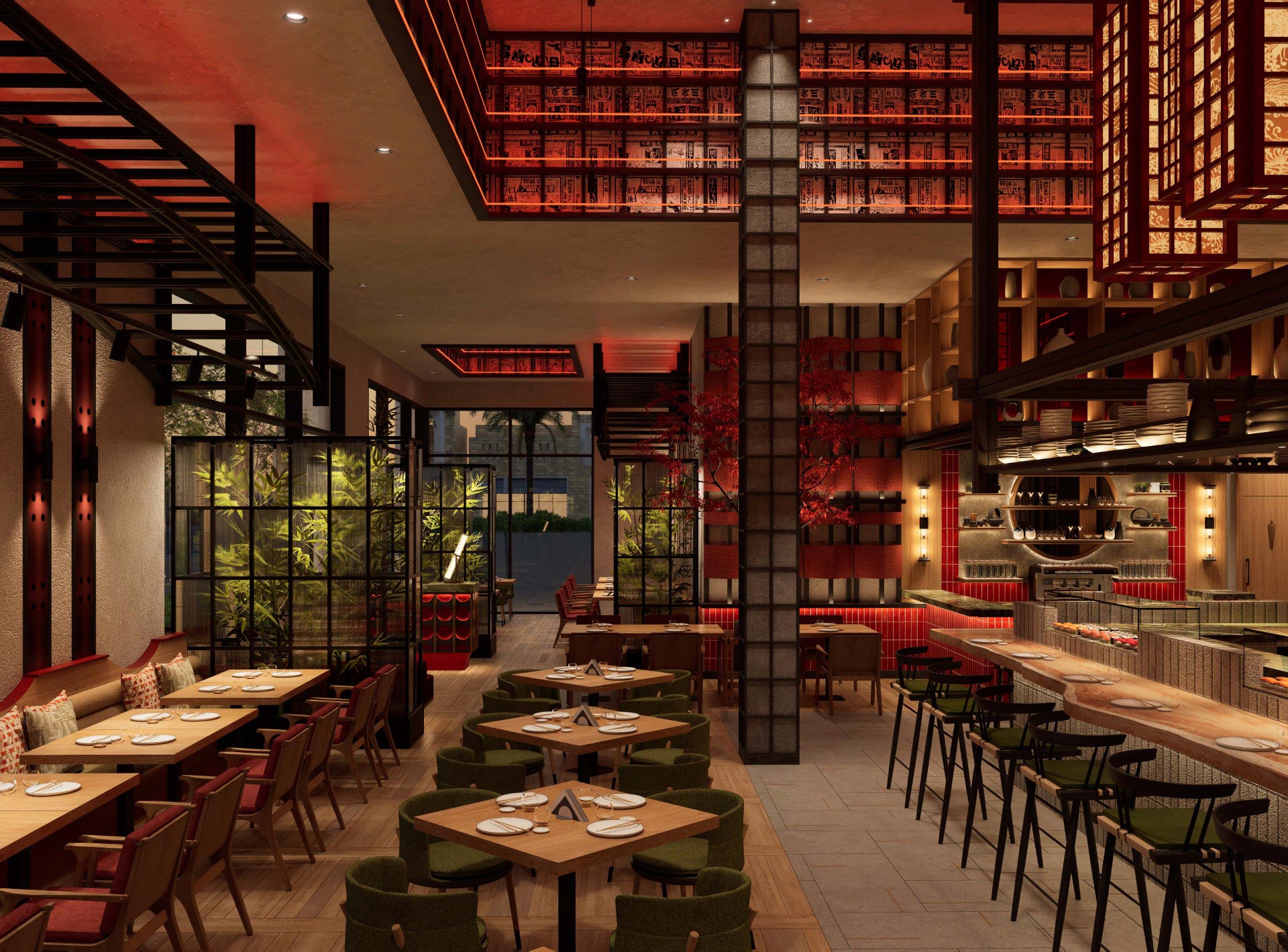
Tokyo Social, Best Casual F&B Interior Design Concept (Shortlisted)
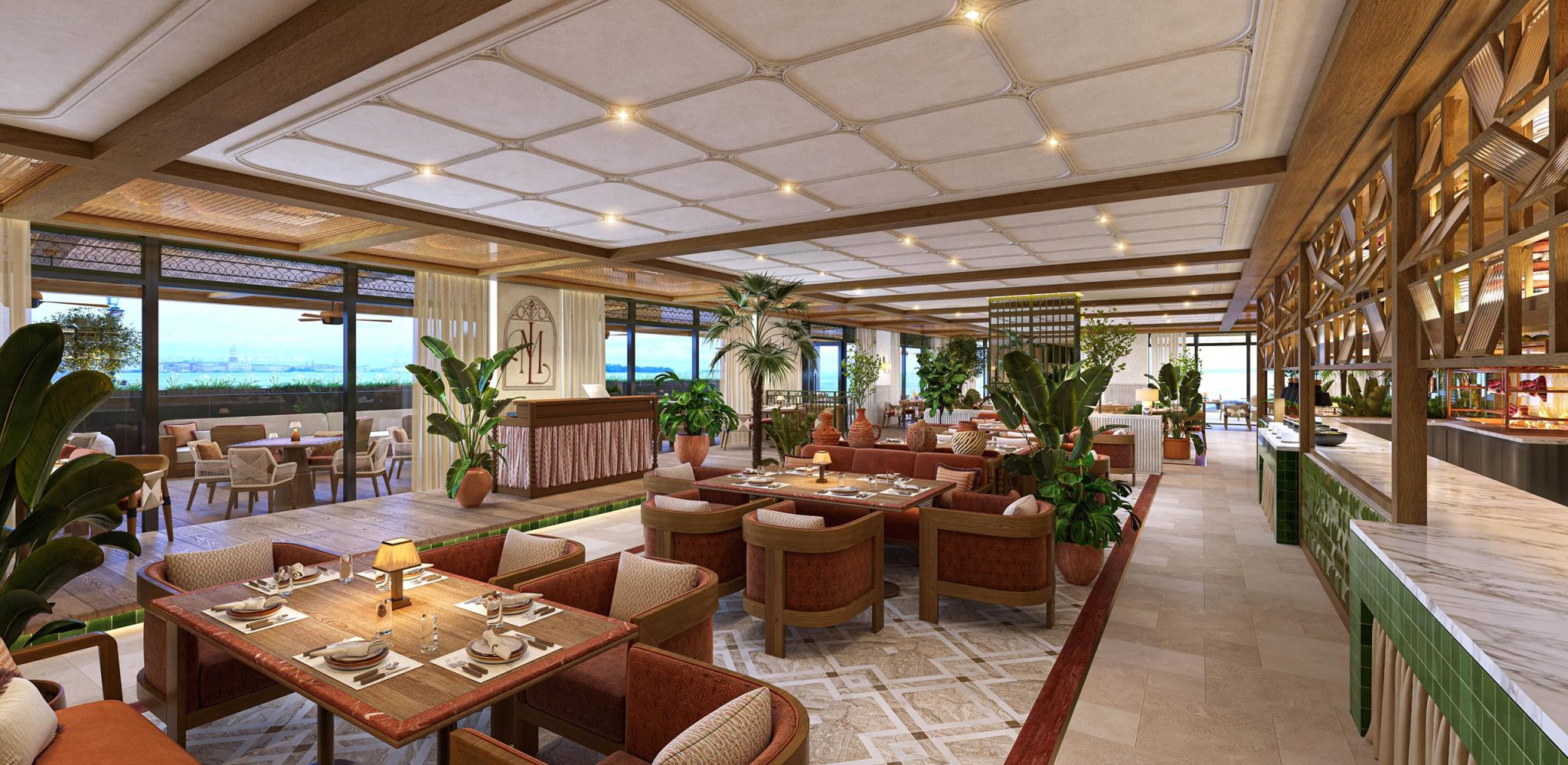
Maison Lyla, Best High-End F&B Interior Design Concept (Shortlisted)
The Problem with
Designing to Category
A casual restaurant can be under-designed just as easily as a high-end restaurant can be over-designed.
When category becomes an aesthetic instruction, two familiar problems tend to follow.
The first is a casual restaurant made visually simple because accessible pricing is assumed to require an equally accessible interior, often at the expense of character. The second is a high-end restaurant that signals its price point through visible expense and becomes overworked.
Both begin with the same mistake: deciding what the room should look like before deciding how people should use it.
“Casual hospitality deserves thoughtful planning, craftsmanship and a clear identity,” says Karma. “High-end hospitality needs ease, warmth and comfort.”
Tokyo Social and Maison Lyla show what happens when the brief begins with experience instead.
Tokyo Social:
Depth without Formality
The most obvious way to make a Japanese restaurant feel Japanese was also the least interesting.
Tokyo Social needed to introduce a younger expression of an established identity without losing the precision and credibility associated with Japanese dining.
Rather than relying on recognisable Japanese imagery, the team asked how Tokyo feels: its movement, layering, craftsmanship and social energy. The values remained, but their expression became more contemporary.
The open sushi counter became the social heart of the restaurant. It gives a casual format a visible sense of craft while creating a focal point rooted in food rather than decoration.
The challenge was balancing that energy with spaces for guests seeking a quieter meal. Visibility, seating, circulation and service therefore had to be resolved together.
Screens became an important tool. They frame views towards the counter and across the restaurant, creating connection without exposing everything at once. Guests feel the activity around them while retaining a degree of enclosure.
That is where sophistication belongs in casual dining: in the quality of the decisions, not in formality.
As Karma puts it, “Guests do not need to analyse the design to benefit from it.”
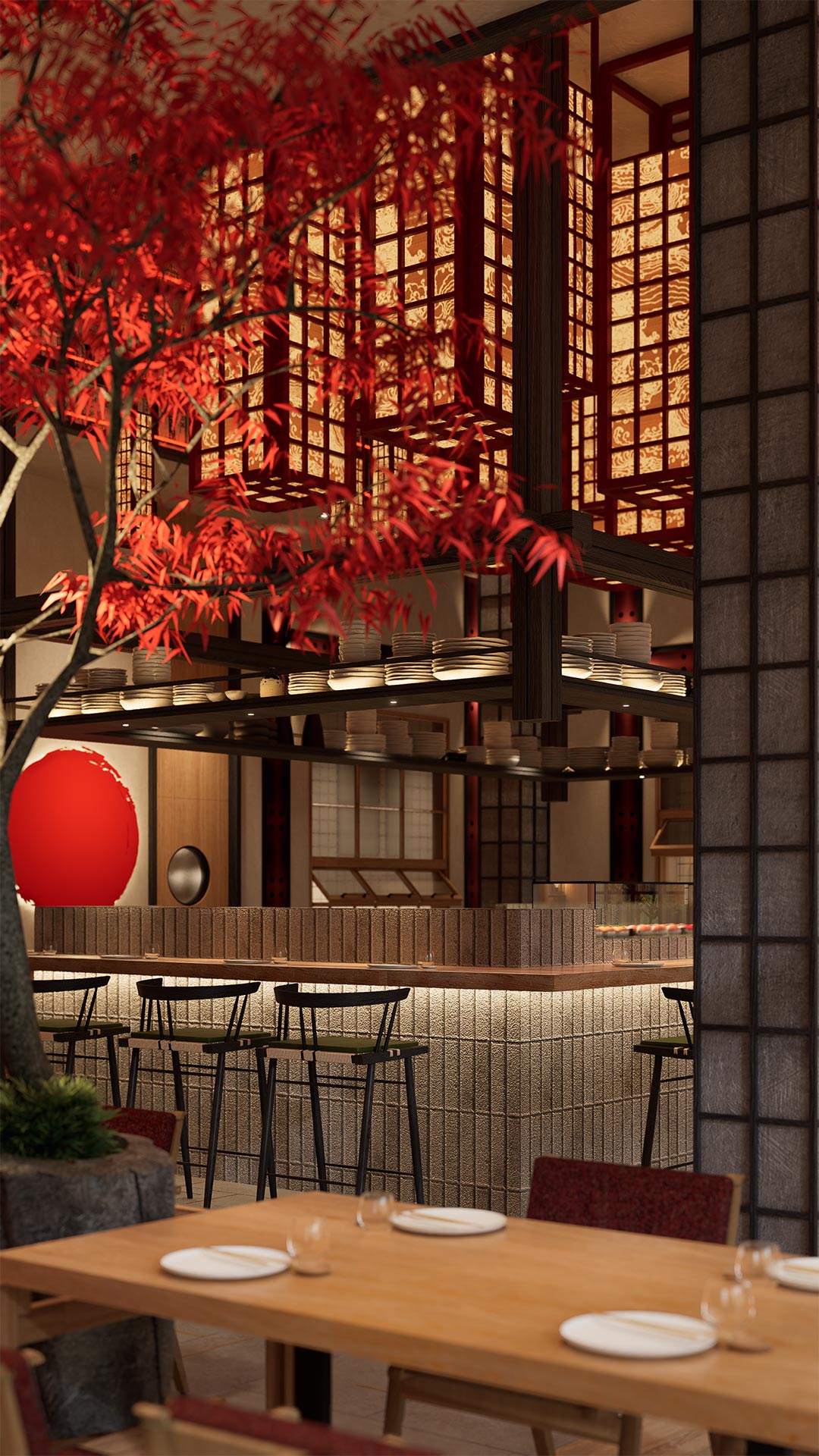
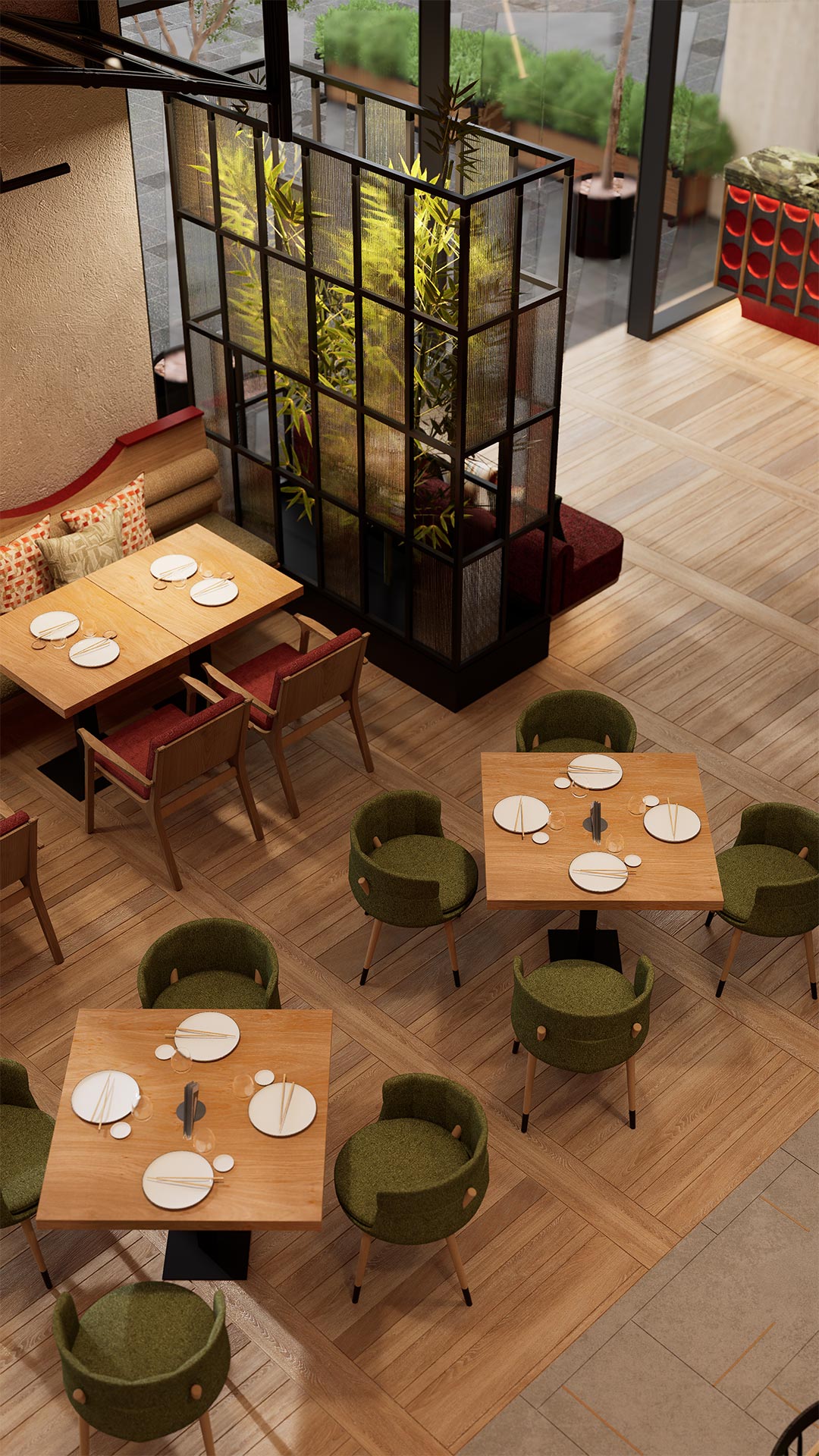
A visible expression of craft, the sushi counter anchors the restaurant as the social heart
Creating intimacy without isolation through layered screens and framed views
Maison Lyla:
Luxury without Display
The challenge at Maison Lyla was not how to make it feel luxurious. It was how to make luxury feel effortless, while accommodating everything from an intimate dinner to a family gathering or celebration.
The idea that unlocked the planning was simple: what if the restaurant behaved like a home?
The arrival, lounge, dining room and garden terrace were organised as a sequence of connected spaces, each with its own character. Guests can choose the setting that suits the occasion without stepping outside the concept.
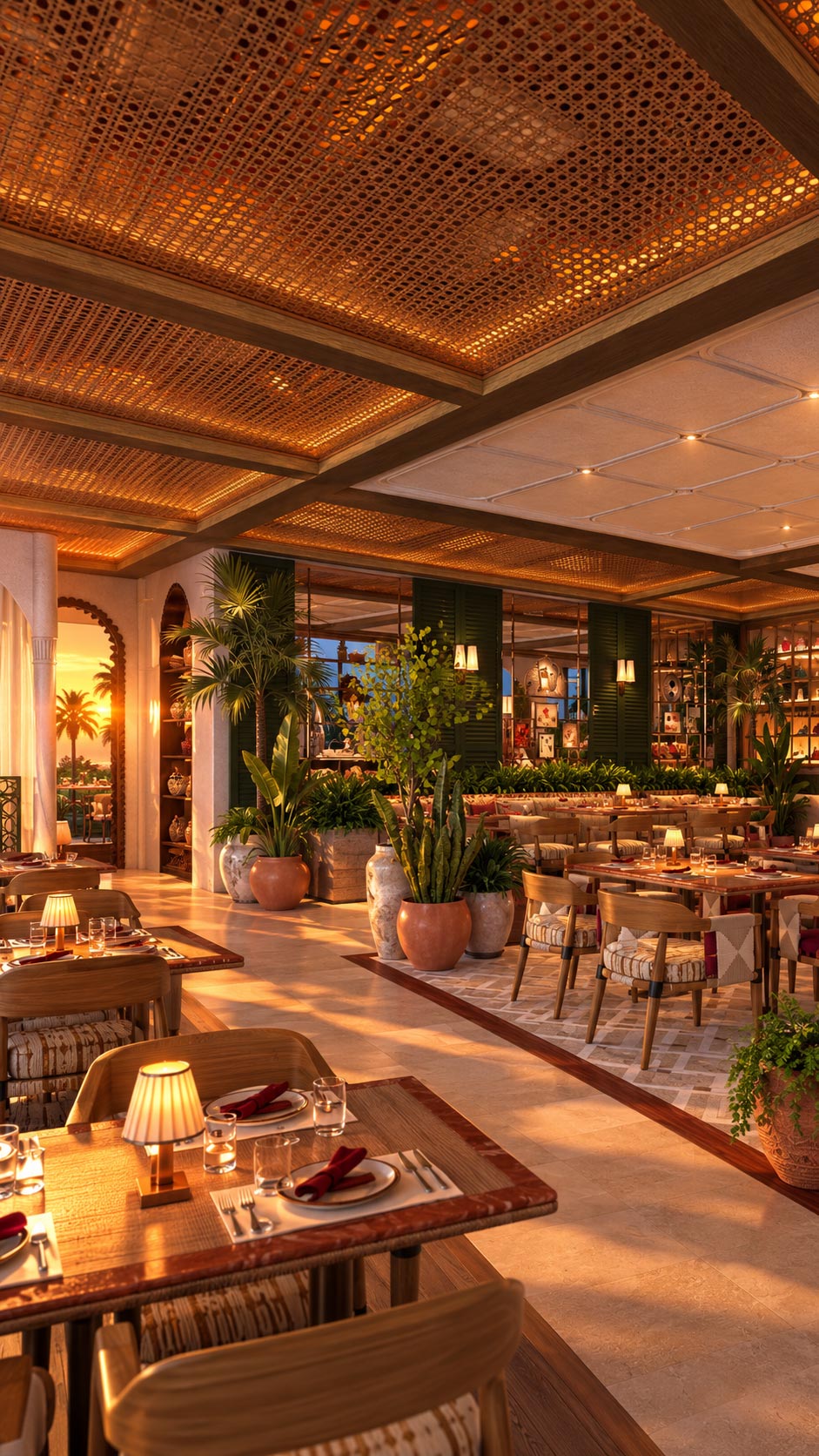
Rather than reproducing the visual language of a traditional Lebanese home, the design drew from how those homes are experienced: the connection between inside and outside, filtered light, tactile materials and the table as a social anchor. The connection to Lebanon comes through proportion, materiality and the way the space encourages people to gather and stay.
Removing the obvious signals of opulence does not make a room easier to design. It makes it harder.
“The challenge is knowing when the design has enough,” she says. In a restrained interior, every proportion, junction and lighting decision is more visible, and so is every operational flaw. A beautifully composed room loses its sense of luxury the moment service feels awkward.
What guests appear to value here is less spectacle than care: comfort, privacy when they want it, and a clear sense of place.
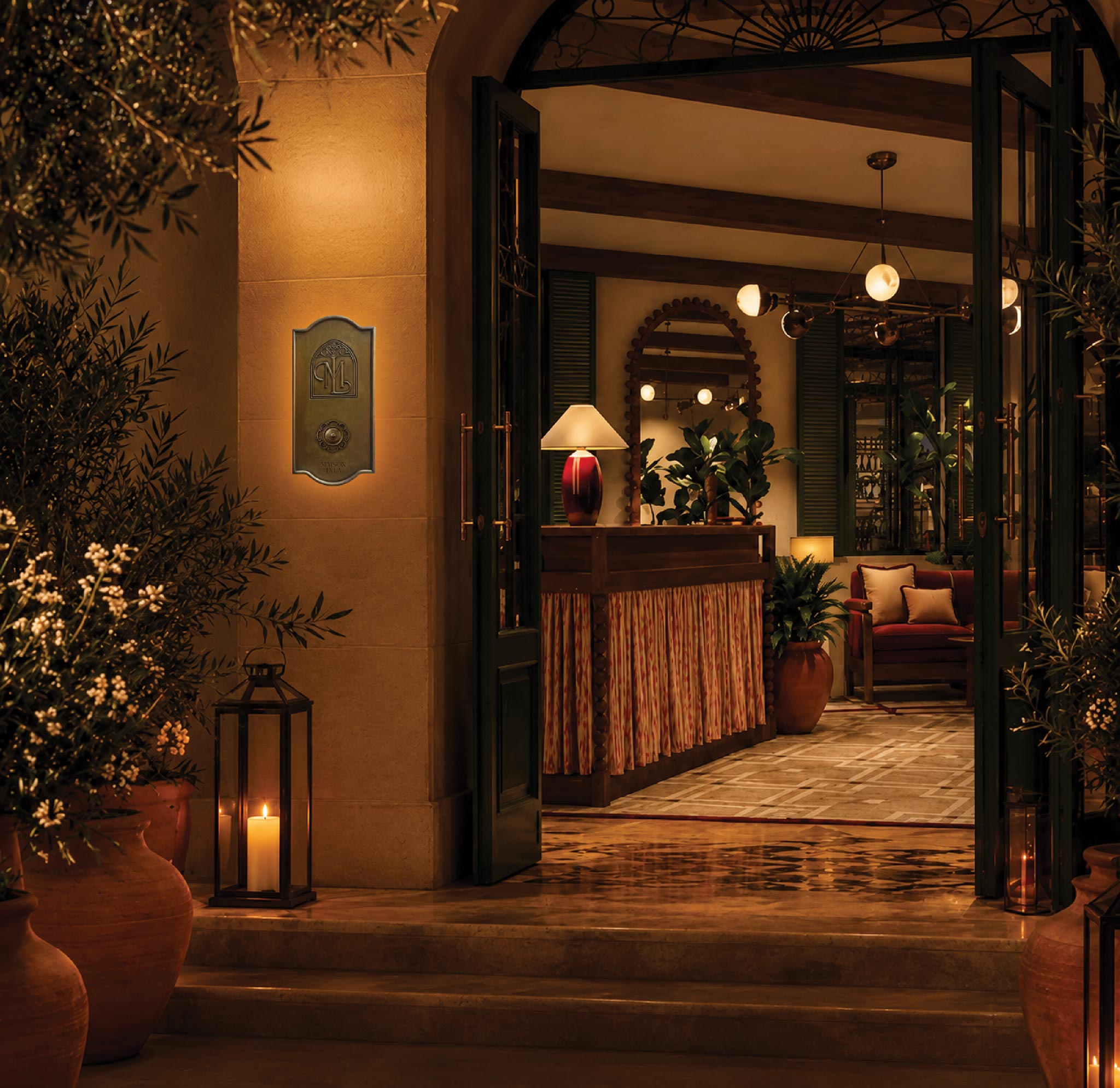
The experience begins like entering a home, setting the tone before reaching the dining room
Warm, filtered light and tactile natural materials create a sense of richness and depth
Designing for Experience,
Not Price Point
Strip away the category labels and the core design question becomes surprisingly similar.
The two restaurants occupy different positions, carry different investment levels and operate different service models. Yet, in Karma’s words, “the pivotal decision was about how people would inhabit the restaurant.”
At Tokyo Social, that meant placing the counter at the centre of the experience. At Maison Lyla, it meant organising the venue as a sequence of home-like rooms. The material language followed those decisions, not the other way around.
Each end of the market also has something to learn from the other.
High-end restaurants can borrow the ease of good casual hospitality: the sense that guests can relax without becoming overly conscious of the setting.
Casual concepts can borrow the attention luxury gives to comfort, lighting, acoustics and detail. Those qualities depend less on budget than on clear priorities about where it is spent.
For developers and operators, the implication begins with the brief. A brief led by category invites a designer to style a price point. One led by occasion, behaviour and the intended experience gives every decision, from layout to lighting to furniture, something to be tested against.
Beyond the label
Guests rarely think about whether a restaurant has successfully expressed its market category. They think about whether they enjoyed being there.
Categories will remain commercially useful. They help define pricing, staffing and positioning.
But guests do not experience categories. They ask simpler questions: does this place have a clear identity, does it suit the occasion, and do I want to come back?